A few days back, my son Sid was stuck on a school assignment, and before I could even open my mouth to explain it, he had already typed the question into ChatGPT and had a full answer staring back at him. It made me pause for a second — when was the last time I actually worked through something myself, instead of just asking a chatbot?
That one small moment took me down a rabbit hole. Because if you think about it, this is not a new problem. We have been doing this to ourselves since the Stone Age.
A few weeks back, over drinks with friends in Sydney, I was sitting back, holding a cold beer in my hand.
Ravan leaned over, grabbed another chilled bottle from the bucket, and offered it across the table. “Shivam, Have a beer with us.”
Shivam waved his hand dismissively, swirling the ice in his glass. “No way, yaar. Why would I switch to a light beer when I’m already drinking whiskey? Whiskey, vodka, brandy—that’s the real stuff. Beer won’t even hit the spot.”
Everyone around the table nodded in agreement. And on paper, they weren’t wrong. Beer typically sits around 4% to 5% alcohol, while whiskey sits way up at 40% to 42.8%.
Case closed, right?
I looked down at the bottle in my hand, turned to Shivam, and said, “Wait a minute. Let’s not close the case yet.”
The Question Nobody Was Asking
Everyone was comparing the percentage. Nobody was comparing the quantity.
Think about it. When you drink whiskey, how much do you actually pour? A peg is usually 30ml, sometimes 60ml if you’re generous. But when you drink beer, you are not sipping 30ml from a shot glass. You are opening a full bottle — 330ml, 500ml, sometimes 650ml.
So the real question is not “which drink has more alcohol in it.” The real question is “which drink puts more alcohol in you.”
And that, my friends, is where the data tells a completely different story.
When people discuss football, one debate always comes up: Lionel Messi or Cristiano Ronaldo?
Both are absolute legends of the game, but I have always preferred Messi. The reason comes down to how he plays when his team needs a breakthrough.
Cristiano Ronaldo is a master finisher—he waits in and around the penalty box, expecting the right pass, and scores with incredible precision. But Messi does something different. When the midfield is stuck and the passes aren’t flowing, Messi doesn’t just stand up front waiting for someone to feed him the ball.
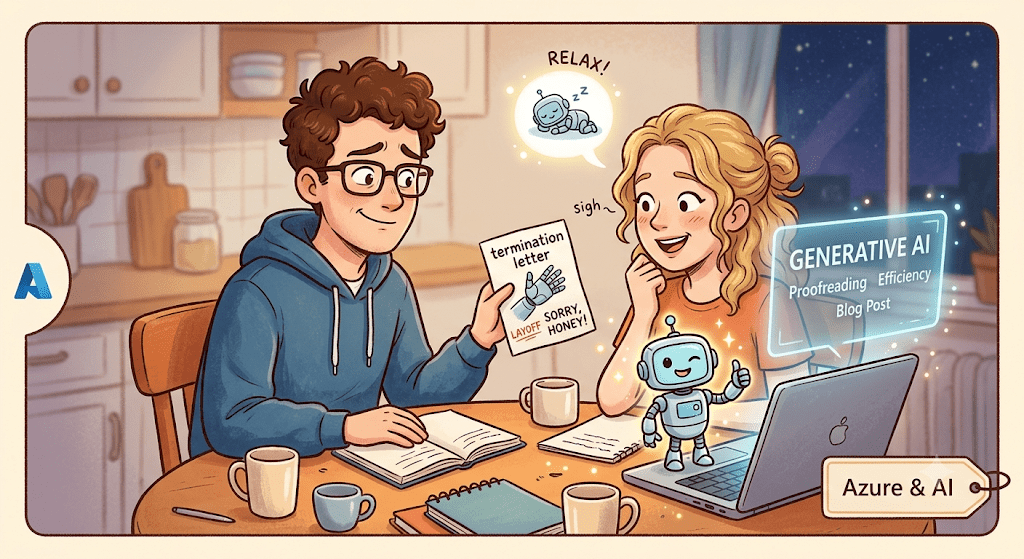
For years, I had a very specific, high-stakes ritual every time I finished writing a blog post about Azure. But I was bit lazy to do proof reading few times to correct it and make a good flow.
So, like any loving husband, I did what felt natural: I handed it over to my wife.
Now, you have to understand—my wife works in a completely different domain. Cloud architecture to her might as well have been ancient Greek. But bless her heart, she never hesitated. She’d sit there for hours, squinting at complex technical terms, patiently fixing my clunky sentences, and trying to make my Azure ramblings actually read like human English.
Did those technical blogs make any sense to her? Absolutely not. But she was a total team player.
The silver lining for her back then? I rarely wrote blogs. So her “unpaid proofreading side-hustle” didn’t completely ruin her work-life balance.
Xavi Hernández… I am sure it is a familiar name to anyone who loves football. He was part of the iconic Spain team that won the World Cup back in 2010—the very same year I got married.
Throughout his career, Xavi played as a central midfielder. He wasn’t particularly fast, nor was he a flashy dribbler. Yet, he served Barcelona and the Spanish national team at the highest level for years.
So, what made Xavi so special?
The main role of a midfielder is to win the ball from the opponent and distribute it to teammates in attacking positions. But Xavi did this differently than everyone else. He did it through scanning.
I grew up watching Mohammad Azharuddin, Ajay Jadeja, and Robin Singh field for the Indian team. They were the ones who completely changed the way Indian fielders moved on the ground. It was truly the start of a new fielding era for us.
However, if we look at who changed the perception of fielding on a global scale, it wasn’t them. So, who was it?
Think back to the 1992 Cricket World Cup in Brisbane. There was an iconic, horizontal, flying dive from backward point to run out Pakistani batsman Inzamam-ul-Haq.
Then, fast forward to 1998 at Edgbaston during the Emirates Triangular Trophy. Another unbelievable, flying catch sent England’s Robert Croft back to the dressing room.
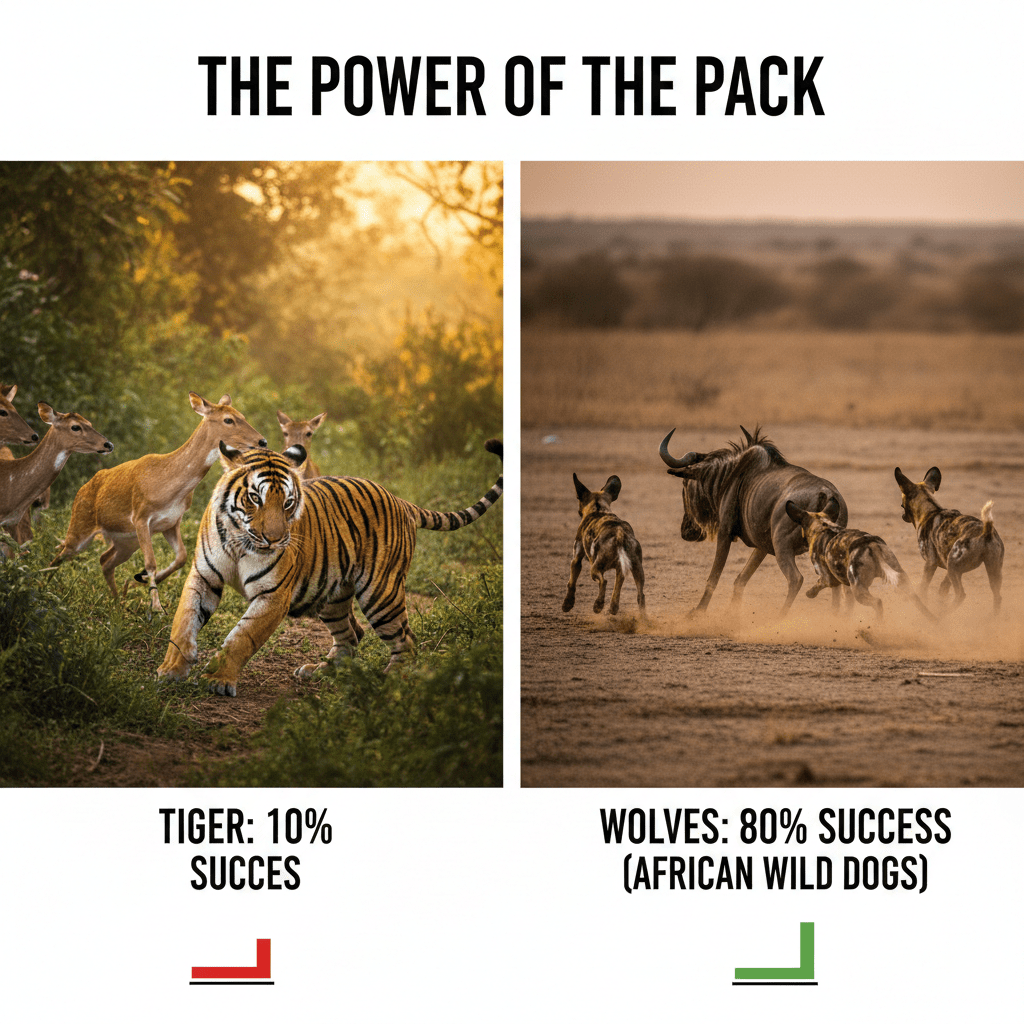
Did you know that a tiger—one of the most powerful predators on earth—only succeeds in about 10% of its hunts? That means for every ten times it tries to eat, it fails eight or nine times.
Now, look at wolves. Their hunting success rate is around 25%. But if you look at the African Wild Dog, their success rate skyrockets to an average of 80% (ranging from 60% to 90%).
Why is the difference so massive? It’s simple: The Pack.
I am writing this from thousands of feet above, on my way to Seattle for Confluent’s Global Kick Off 2026.
It’s been three months since I joined. Looking back, leaving my previous role wasn’t easy. I was comfortable. I knew Azure like the back of my hand. Moving here meant leaving that safety net for a completely new technology stack. I have always loved technology, and I learned everything put in front of me. But the biggest change isn’t just the tech—it’s how I explain my job.