Six Years at EDS, One Story I Kept

I spent almost seven years at EDS. In India, it later became Mphasis, an EDS company, but I still say it with pride: I’m an ex-EDSer.

Long after I left, one story from the company’s history stayed with me.

In 1978, two EDS employees, Paul and Bill, were arrested in Iran during the revolution. The bail was set at about $12.75 million, which looked less like justice and more like a ransom. The US government said there was little it could do.

Ross Perot, the founder, could have stopped there. He could have said, “We tried everything,” and nobody would have blamed him.

Instead, he called a retired army colonel named Bull Simons. Together they put together a team, mostly EDS people and not soldiers, and trained them to bring their colleagues home. In the end, a mob broke open the prison and freed the two men before the plan was needed. But the team was there, and they got everyone across the border to safety. Perot was waiting for them.


Continue reading “Six Years at EDS, One Story I Kept”

Be a Beginner Again: How Humble Teams Move Faster

A senior data architect sat in a high-stakes architecture review. For over a decade, he had been the go-to authority on batch ETL pipelines, relational data warehouses, and nightly sync jobs. When an initiative landed on his desk to handle real-time streaming data and event-driven microservices, his immediate reaction was not curiosity. It was defense.

He spent the first twenty minutes arguing why the existing batch scripts were “good enough,” and why the team shouldn’t gamble on an unfamiliar paradigm. He wasn’t acting out of malice. He was protecting the reputation he’d spent ten years building. Moving to real-time streams meant that on day one of the new project, he wouldn’t be the expert in the room.

It took a junior engineer spinning up a rough local prototype over the weekend, showing a live stream processing events in sub-second latency, to break the deadlock. The senior architect had a choice: spend his credibility defending a system past its prime, or sit down beside the junior engineer, open the logs, and ask: “Walk me through how this works.”

He chose the second path. Within a month, he was the one helping the team design the production version, combining his deep knowledge of system failure modes with the new streaming pattern. His influence didn’t shrink. It multiplied.

Continue reading “Be a Beginner Again: How Humble Teams Move Faster”

The Tailor Who Taught Me the Value of “No”

Growing up, every school year began with the same ritual: buying fabric for a new uniform.

Because convenience won every debate in our household, my mother always took the cloth to a tailor just down our street. The logic seemed sound—he was a five-minute walk away, a familiar face in the neighborhood, and always eager for business.

“When can we collect it?” my mother would ask, handing over the material two weeks before reopening day.

“Day before school reopens, definitely,” he’d reply cheerfully, chalk tucked behind his ear, barely glancing up from his measuring tape.

The day before school reopened, I’d walk over with high hopes.

“The pocket stitching is almost done. Tomorrow morning, before assembly. For sure.”

Tomorrow morning came. The shop was shuttered, or he was frantically working on three other shirts. That turned into “Give me two more days,” which stretched into “Just by this weekend.”

The consequence didn’t fall on him; it fell on me.

Continue reading “The Tailor Who Taught Me the Value of “No””

Is There a Rope Holding Your Team Back?

A baby elephant is tied to a post with a thin rope. It pulls and pulls, but the rope holds. After a while, it stops trying.

Years later, the elephant is strong enough to break the rope. But it doesn’t try. It has learned to believe that it can’t.

Teams can learn the same lesson.

Consider this illustrative story. A senior leader at a fast-growing data and AI company noticed that one of his teams wasn’t delivering as expected. The people were skilled, and the work was interesting. So he spent a week sitting with them, quietly watching how they worked.

During the week, he noticed patterns that had likely been developing for months.

Continue reading “Is There a Rope Holding Your Team Back?”

What if the God has a line manager and yearly appraisals ?

We all know the ritual. You grind for 365 days, log every tiny win on your self-assessment, and try to convince your boss that you single-handedly saved the company. Why do we put ourselves through this stress? Simple: hard work pays for the lifestyle, dinner table upgrades, and overall well-being of our loved ones.

Whether it happens annually, half-yearly, or in quarterly sprints, the corporate machine always demands its sacrifice. We get evaluated, squeezed into a bell curve, and neatly labeled: Exceeds Expectations, Meets Expectations, or the dreaded Needs Improvement.

Now, given that over 90% of humanity believes in a higher power running the universe, a very reasonable corporate question arises:

What if God had a Line Manager?

Welcome to the annual strategic review at Cosmic HQ.

Continue reading “What if the God has a line manager and yearly appraisals ?”

The Art of Scanning: What Xavi Hernández Taught Me About Technical Success

Xavi Hernández… I am sure it is a familiar name to anyone who loves football. He was part of the iconic Spain team that won the World Cup back in 2010—the very same year I got married.

Throughout his career, Xavi played as a central midfielder. He wasn’t particularly fast, nor was he a flashy dribbler. Yet, he served Barcelona and the Spanish national team at the highest level for years.

So, what made Xavi so special?

The main role of a midfielder is to win the ball from the opponent and distribute it to teammates in attacking positions. But Xavi did this differently than everyone else. He did it through scanning.

Continue reading “The Art of Scanning: What Xavi Hernández Taught Me About Technical Success”

Leading the Landscape, Not Just the Metrics

In management theory, there is a long-standing ideal: the leader as a perfectly balanced scale. Objective, unwavering, and strictly impartial.

For years, standard workplace philosophy has held that fairness is simple math. If a leader gives one team member an hour of guidance, everyone should get an hour. If a performance standard is set, that exact standard should apply to the person sitting next to them, regardless of what is happening behind the scenes. Remaining squarely down the middle is often seen as the ultimate shield against favoritism

Then reality quietly breaks the model.

Continue reading “Leading the Landscape, Not Just the Metrics”

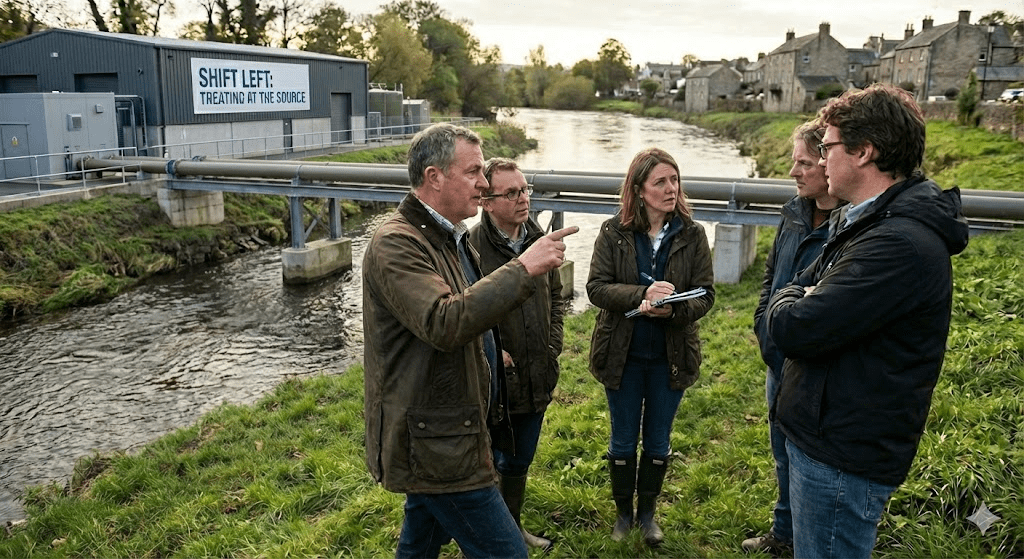
From Rivers to Repositories: “Shifting Left” is Simplified

Once upon a time, a thriving town was built along the banks of a Great River. For generations, the town flourished, but as the population exploded, clean water became scarce. To keep the town running, the Mayor decided it was finally time to tap into the river’s massive current.

There was just one problem: The river water was thick with mud.

The Mayor summoned two experts, each proposing a radically different vision for the town’s future.

Continue reading “”

The Pressure Cooker Whistle: Explaining My New Job

I am writing this from thousands of feet above, on my way to Seattle for Confluent’s Global Kick Off 2026.

It’s been three months since I joined. Looking back, leaving my previous role wasn’t easy. I was comfortable. I knew Azure like the back of my hand. Moving here meant leaving that safety net for a completely new technology stack. I have always loved technology, and I learned everything put in front of me. But the biggest change isn’t just the tech—it’s how I explain my job.

Continue reading “The Pressure Cooker Whistle: Explaining My New Job”

How the Right Stakeholders Earn Customer Confidence – A Real Wedding Story

When it comes to customer service, one principle often overlooked is the power of involving the right stakeholders at the right time. Let me explain how we handled this while planning my cousin’s wedding.

The Challenge: Quality on a Limited Budget

We had a clear goal – to organize a beautiful wedding within a limited budget, without compromising on quality. Food was the biggest priority, and I reached out to multiple event management teams. Most either quoted very high prices or couldn’t guarantee the quality we wanted.

One day, I received a call from a person named Fazil from a Pee Vee Events based in Perijanam, about 50 km away from our venue. Initially, I was hesitant. My main concern was freshness of food – after all, no one wants to take a chance on wedding day meals.

My initial reaction? A firm “no.” The distance of their kitchen was a major red flag for food quality and freshness, especially for a significant family event. Moreover, we had no idea about service quality. However, the salesman, Fazil, was persistent and, more importantly, perceptive. He understood my reluctance and immediately offered a guarantee: impeccable food quality, freshness, and even the promise of setting up a kitchen closer to our venue.

This was a good start, but what truly solidified our confidence was his next move. Fazil didn’t just ask for another phone call; he requested an in-person meeting. And he didn’t come alone.

Continue reading “How the Right Stakeholders Earn Customer Confidence – A Real Wedding Story”

Delegate and Empower – Are they different?

They are not…. Empowerment takes delegation to the next level that gets you greater results. Leaders play big role in transforming team to a highly empowered team to achieve great outcomes. Let’s look at these closely.

Leaders who delegate tasks effectively manage their time to focus on more strategic initiatives rather than getting bogged down with firefighting and routine tasks. By delegating tasks and empowering team members to make decisions, leaders can tap into a wider range of perspectives and expertise.

When delegating a task, leaders should provide clear instructions on what needs to be done, how it needs to be done, and by when. They should also provide any necessary resources and support, and set clear expectations for the delegated task, including the deadline, deliverables, and quality standards.

Delegation isn’t just about assigning tasks; it’s about empowering your team, fostering growth, and maximizing collective output. These depend on your leadership style, the tasks, and your team’s capability and strength.

Continue reading “Delegate and Empower – Are they different?”

You don’t be that FROG in the well.

I remember I learned about a frog that lived in the well. Since frog was in the well entire his life he thought that the Well is the world and there is nothing beautiful than that until the water in the well dried and frog had to come out of it.

We should not be that FROG in the well.

Froginthewell

There are lot of things in the world that we have not learned and seen yet. We must be open to learn. You might be able perform well in your job today. But we need to think about tomorrow. The world is changing too fast, so we need to learn faster and act swiftly to survive in the world.

It is not just about learning, we also need to look around and check are we doing it properly. It this the best of doing? There are 100s of people in the world doing similar stuff differently. It is a challenge to get know about how others are doing. That is where you need to collaborate with others, engage yourself with others in the world, hear other, share your thoughts,  arranged hackathons to bring new ideas and encourage openness in the team to bring new thoughts. We never know, the ideas can come from junior in the team. Remember an idea can change your world !!!

Continue reading “You don’t be that FROG in the well.”